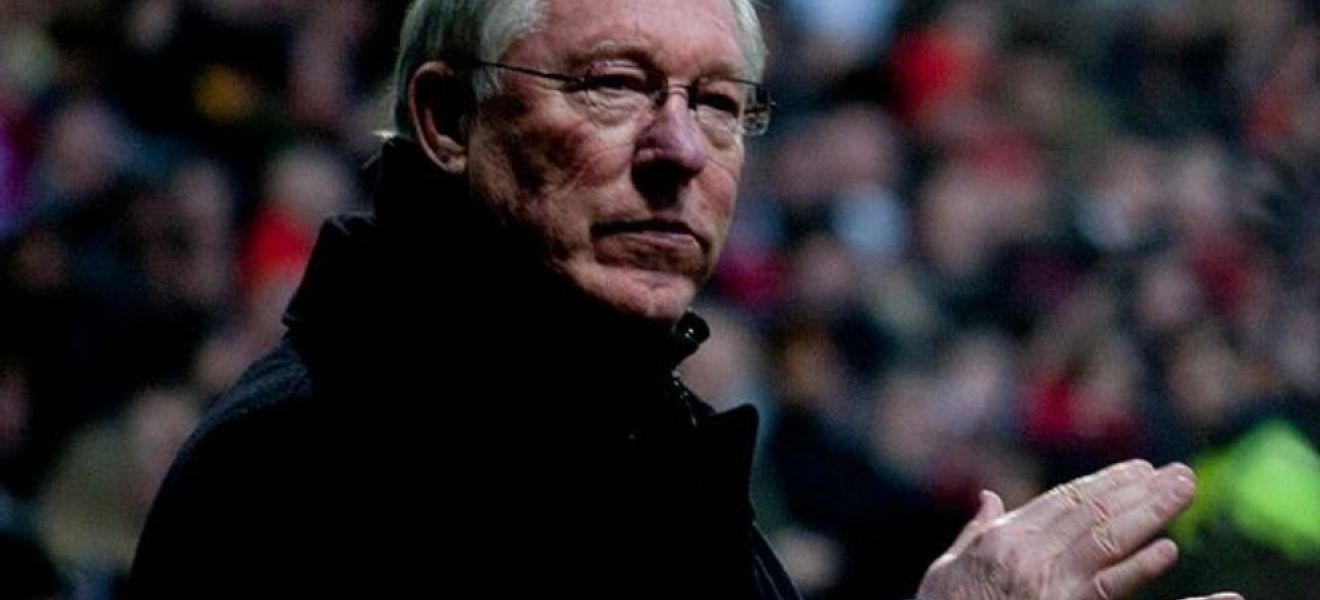
The Magic of Sir Alex Ferguson: A Footballing Titan’s Legacy
Few names in football resonate with the same reverence as Sir Alex Ferguson. Over a managerial career spanning nearly four decades, Ferguson transformed clubs, redefined success, and left a lasting mark on the sport. His 26-year reign at Manchester United alone, yielding thirteen Premier League titles, two Champions League triumphs, and a catalogue of other honours stands as a monument to his genius. But what made Ferguson so special? Was it his tactical intelligence, his man-management, or something more intangible? With his legacy still inspiring debates among football fans and pundits alike, in this article I delve into the magic of Sir Alex and ask, is he the greatest manager of all time?
The Making of a Master
Born on December 31, 1941, in Govan, a gritty shipbuilding district of Glasgow, Ferguson’s roots shaped his character. A decent player himself, Sir Alex scored 171 goals in 317 games across Scottish clubs like Rangers, and his transition to management began modestly. At East Stirlingshire in 1974, he earned a reported £40 a week, juggling part-time coaching with running a pub. Yet even there, his intensity shone through. Former player Bobby McCulley recalled Ferguson’s first meeting: “He walked in, kicked a ball against the ceiling, and shouted, ‘I’m here to sort this mess out.’ We were terrified but hooked at the same time.”
His early successes both at St. Mirren and Aberdeen hinted at greatness. At Aberdeen, he shattered the Old Firm dominance of Rangers and Celtic, winning three Scottish titles and, most famously, the 1983 European Cup Winners’ Cup against Real Madrid. That night in Gothenburg, a 2-1 upset sealed in extra time, showcased Fergie’s ability to outthink the giants, a trait that would define his career.
The Manchester United Miracle
When Ferguson arrived at Manchester United in November 1986, the club was a sleeping giant, trophyless for nearly two decades and languishing in mid-table obscurity. His early years were rocky, with United fans chanted “Fergie Out” in 1989, but his faith in youth and unrelenting drive turned the tide. The 1990 FA Cup win, secured after a replay against Crystal Palace, bought him time. What followed after was a dynasty.
Ferguson’s magic lay in his adaptability. He evolved from the 4-4-2 rigidity of the early ’90s to the fluid, counterattacking 4-3-3 that conquered Europe in 1999 and 2008. His sides weren’t just winners, they were entertainers. The 1998-99 treble season, capped by that iconic Champions League final against Bayern Munich, typified his genius. Trailing 1-0 in stoppage time, United scored twice through Teddy Sheringham and Ole Gunnar Solskjaer, both substitutes Ferguson had boldly introduced. “Football, bloody hell,” he quipped afterward, a line preserved in lore.
The Hairdryer and the Human Touch
Ferguson’s man-management was his secret weapon. The “hairdryer treatment” his volcanic dressing-room tirades became legendary. Gary Neville once recounted a 1997 outburst after a sloppy draw: “He threw a teacup at the wall and screamed, ‘You’re Manchester United, start acting like it!’ We didn’t lose for weeks.” Yet this ferocity was balanced by empathy. He knew every player’s wife’s name, sent handwritten notes to injured youngsters, and protected stars like Eric Cantona from media storms.
His handling of Cantona’s 1995 kung-fu kick incident is a case study. After the Frenchman’s eight-month ban for attacking a Crystal Palace fan, Ferguson didn’t discard him, he rebuilt the team around him. Cantona repaid that faith with the title-winning goal in 1996. Similarly, when David Beckham’s 2003 fallout with Ferguson culminated in a boot flying across the dressing room accidentally cutting Beckham’s eyebrow, the manager’s decision to sell him to Real Madrid was ruthless but strategic, and his United won the league again within two years.
Tactical Brilliance and Mind Games
Ferguson’s tactics were never static. He shaped strategies to opponents, often springing surprises. In the 2008 Champions League final against Chelsea, he deployed Cristiano Ronaldo as a roaming forward, unsettling John Terry and company, before winning on penalties. His substitutions were uncanny, Solskjaer, dubbed the “Baby-Faced Assassin,” scored 17 goals off the bench in 1998-99 alone.
Off the pitch, his psychological warfare was unmatched. He provoked rivals like Arsenal’s Arsène Wenger “He’s a novice, he should keep his opinions to French football”, and Liverpool’s Rafael Benitez, the infamous “facts” rant in 2009. These mind games rattled opponents and spurred his own squad. Ryan Giggs once said, “He’d wind them up, so we would run through walls for him.”
The Class of ’92 and Beyond
Ferguson’s faith in youth was also revolutionary. The Class of ’92 ‘Beckham, Giggs, Neville, Paul Scholes, and Nicky Butt’ emerged from his decision to ditch aging stars in 1995. Informed by pundits his kids couldn’t win the league; he responded with a 1995-96 double. That group became the backbone of United’s then dominance, a testament to his eye for talent and willingness to take risks.
Even in his later years, he reinvented United. After the 2008 Champions League win with Ronaldo and Rooney, he rebuilt again, integrating Javier Hernández and Phil Jones to snatch the 2011 title from Chelsea’s grasp. In Sir Alex’s final season, the 2012-13 year, saw the Red Devil’s claw back a fifteen-point deficit to Manchester City, with Robin van Persie’s 26 goals sealing a 20th league crown. Ferguson retired that May, leaving Old Trafford on his terms.
Quirky Tales and Unforgettable Moments
Ferguson’s career brims with stories. In 1983, after Aberdeen’s European triumph, he banned his players from celebrating too hard, locking them in the dressing room while he sipped tea with Real Madrid’s Alfredo Di Stefano. At United, he once turned up at Ryan Giggs house in disguise, wig and all, to pull the teenager from a party. And who can forget his 2003 pizza-throwing spat with Arsenal after the “Battle of Old Trafford”? Patrick Vieira later admitted, “He terrified us more than Wenger did.”
Perhaps the quirkiest story came in 1996. After a 5-0 thrashing by Newcastle, Ferguson forced his team to train in garish grey kits they’d worn that day, kits he blamed for the loss, claiming they blended into the crowd. United never wore them again, and Newcastle’s lead evaporated by spring that season.
The Greatest of All Time?
Is Ferguson the best ever? The debate remains still in pubs worldwide. His 49 trophies dwarf most rivals, Pep Guardiola (38 as of 2025), Carlo Ancelotti (28), and José Mourinho (26) trail behind. Guardiola’s tactical innovation and Ancelotti’s European haul of four Champions Leagues make strong cases, though, Ferguson’s longevity and versatility set him apart. He won with Aberdeen’s underdogs and United’s Galactico’s, adapting across eras, from the back-pass rule’s introduction to the Premier League’s global boom.
Critics will point to his weaker European record, two Champions Leagues in 26 years compared to Guardiola’s metronomic brilliance or Bob Paisley’s three in nine at Liverpool. Yet Ferguson’s ability to rebuild dynasties, not just sustain them, is what sets him apart. United slump post Fergie underlines how much he carried the club.
The Magic Defined
Ferguson’s magic was a cocktail of fury, foresight, and fatherly care. He turned players into legends, clubs into empires, and losses into lessons. His stare could freeze a room, his words inspire a nation. He once said, “I’ve never played for a draw in my life.” That relentlessness, combined with a human touch, made him special.
Football now marvels at modern maestros like Guardiola, but Ferguson’s shadow looms largest. The best of all time? Perhaps. The most unforgettable? Undoubtedly. In the archives of the beautiful game, Sir Alex Ferguson remains a colossus, half-manager, half-myth, but without a question remaining, all magic.